linenandlavender.blogspot.com

This is our archive — full of timeless inspiration to enjoy anytime. For what we are up to now, visit us at www.linenlavenderlife.com


Showing posts with label Art of Placement. Show all posts

Saladino Style and Guiding Principle

Design by John Saladino, as seen on linenandlavender.blogspot.com, http://www.linenandlavender.blogspot.com/2012/06/saladino-style-and-guiding-principle.html

.
.
.

Design by John Saladino, as seen on linenandlavender.blogspot.com, http://www.linenandlavender.blogspot.com/2012/06/saladino-style-and-guiding-principle.html

.
.
.

Design by John Saladino, as seen on linenandlavender.blogspot.com, http://www.linenandlavender.blogspot.com/2012/06/saladino-style-and-guiding-principle.html

.
.
.

Design by John Saladino, as seen on linenandlavender.blogspot.com, http://www.linenandlavender.blogspot.com/2012/06/saladino-style-and-guiding-principle.html

.
.
.

Design by John Saladino, as seen on linenandlavender.blogspot.com, http://www.linenandlavender.blogspot.com/2012/06/saladino-style-and-guiding-principle.html

.
.
.

Design by John Saladino, as seen on linenandlavender.blogspot.com, http://www.linenandlavender.blogspot.com/2012/06/saladino-style-and-guiding-principle.html

.
.
.

Design by John Saladino, as seen on linenandlavender.blogspot.com, http://www.linenandlavender.blogspot.com/2012/06/saladino-style-and-guiding-principle.html

.
.
.

Design by John Saladino, as seen on linenandlavender.blogspot.com, http://www.linenandlavender.blogspot.com/2012/06/saladino-style-and-guiding-principle.html

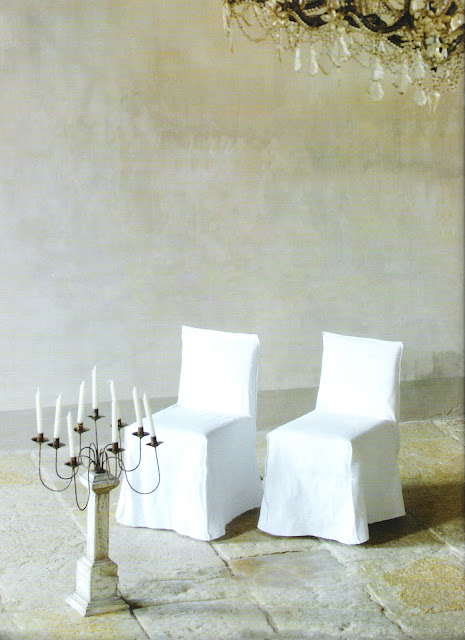
In understanding the power of shape and form, the seventeenth century Dutch painter Vermeer is a model for me.  He placed people and furnishings, windows and architecture, in the foreground of his canvases with such precision that he made still lifes of these elements.  Taking lessons from his paintings, I challenge my clients to stop thinking about design as having to do with merchandise and furniture and, instead, hope that they will come to believe, as I do, that a room should be like a walk-in still life.  By that I mean the space should demonstrate an orchestration of shapes in harmony with each other.  At every step, decisions of shape and space must be made that will add or subtract from the overall design harmony:  Is the chair beautiful to look at from the back as you walk into the room?  Should it be open-backed because the room is small and you do not want it to steal space?  Every decision narrows the options. 
— John Saladino, excerpt from Style by Saladino, pg 10: Guiding Principles
Design by John Saladino, as seen on linenandlavender.blogspot.com, http://www.linenandlavender.blogspot.com/2012/06/saladino-style-and-guiding-principle.html


..


John Saladino in the emporium (us)

images:  1,2,5,6,7,8 Saladino website; 3,4,9 - Style by Saladino

linen & lavender


visit our new site:


Luis Meléndez at LACMA

Master of the Spanish Still Life


PRESS RELEASE Los Angeles—The Los Angeles County Museum of Art (LACMA) presents Luis Meléndez: Master of the Spanish Still Life, the first U.S. exhibition in twenty-five years of eighteenth-century Spanish painter Luis Meléndez (1715-1780). Meléndez is now recognized not only as one of the greatest Spanish painters of the eighteenth century, but also as one of the most accomplished still life painters of the time. Drawing works from major American and European museums as well as private collections, the exhibition will showcase nearly thirty paintings by Meléndez—many of which have never been exhibited before. In addition, a selection of eighteenth century Spanish kitchenware, similar to those used by the artist as studio props, will be featured. LACMA’s presentation will be the only West Coast showing of Luis Meléndez: Master of the Spanish Still Life and will be on view on the third floor of the Ahmanson Building through January 3, 2010.

Although recognition of Meléndez has been eclipsed over the centuries by that of fellow Spaniard Francisco Goya (1746-1828), Meléndez’s work has received increasing attention from scholars and collectors in recent years. Modern scholarship of his work, including extensive technical examination, has taken on new momentum in the last few decades, providing insight into the artist’s meticulous approach to rendering still lifes.

Meléndez’s acute realism and the austerity of his compositions anticipate aspects of modern art, demonstrating a sensibility that resonates even today.

About the Artist
Luis Meléndez was born in Naples, Italy into a family of artists. He was initially trained in the art of miniature painting by his father, Francisco Antonio. The artist began his career with great promise, studying at the provisional Royal Academy in Madrid, an institution that his father helped to found. Yet in 1748, after Francisco Antonio publicized his disagreements with the Academy, both he and Luis were expelled from the Academy—an event that significantly damaged the son’s prospects for a successful academic career. Indeed, Meléndez’s aspirations for public recognition, particularly for the prestigious position of painter to the King, were never met with success.

However, in 1771 Meléndez received a commission from Charles, Prince of Asturias (later King Charles IV), and his wife, Princess Maria Luisa, to paint an extensive series of still lifes for the New Cabinet of Natural History in the Royal Palace. The royal commission, a central event in the painter’s life, led to modest success with other patrons, though it was cancelled abruptly in 1776. Meléndez died shortly after declaring himself a pauper in 1780, and his reputation sank into relative obscurity.

Exhibition Highlights
Nine of the still lifes from the royal commission, which come from the Prado Museum, will be on view in the exhibition. Meléndez however, had not always viewed himself as a painter of still lifes. His extraordinary Self-Portrait (1746), which will be on loan from the Louvre Museum, exhibits his ambition to succeed in the more elevated genre of portrait and history painting. In his portrait, Meléndez represents himself as a painter of figures, not still lifes. His haughty expression and the simple elegance of his figure set against a plain background give the portrait a commanding immediacy. The work has been recognized as one of the most engaging self-portraits of the eighteenth century.

Common kitchenware, a selection of which will also be on view, often served as props in Meléndez’s paintings, reappearing in individual paintings, and rearranged or juxtaposed with different edibles, including fruits, vegetables, or cheese. In Still Life with Bread, Bottle, and Jug(c. 1770) and Still Life with Bread, Grapes, Jug, and Receptacles (c.1770), the bread, a ceramic jug with a broken plate as a lid, and woodenhandled utensils are arranged identically, except the viewpoint has shifted. Although the paintings share motifs, each one is strikingly inventive.

The exhibition also includes several still lifes from the Prado Museum which are set against rocky landscapes (Still Life with Watermelons and Apples in a Landscape, 1771; Still Life with Pomegranates, Apples, Azaroles, and Grapes in a Landscape, 1771). These original, even eccentric works mark a stark departure from Meléndez’s more usual set-ups on wooden tabletops in dark, undefined interiors.


As I've mentioned in an earlier post, I found myself very drawn to the amazing still life works by Meléndez when I visited the Prado Museum a couple of years ago.  I am really looking forward to seeing this exhibition, particularly the paintings that have not been exhibited previously.  I plan to go soon and I'll report back when I do, but wanted to pass on this news right away.  If you live in the Los Angeles area or will be traveling here during this time period I encourage you to take advantage of this opportunity!   


linen & lavender


You might also enjoy:  
A Night at the Museum:  Luis Melendez and Audrey Hepburn 


update:  this exhibition is now over, but follow l&l and I'll be sure to keep you informed of any upcoming exhibits. :)  ~LeAnn


see our new site:


l&l recommends:


Wind and Water


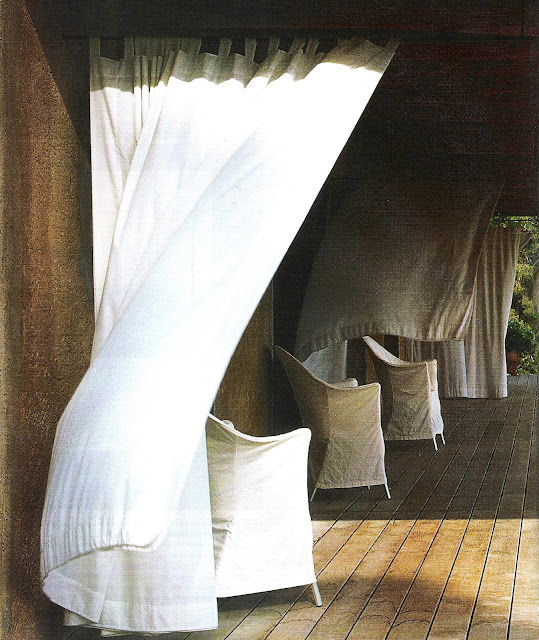
Feng Shui Literally translated as “wind and water”– is perhaps most easily explained as Chinese Geomancy or the “Art of Placement.”  Feng Shui predates Confucianism and Taoism and has been practiced for over three thousand years.  The I Ching (“Book of Changes”) defines the practice as a guide to acting with integrity, respecting the earth and working with the flow of nature.


Although the name Feng Shui (pronounced “fung-shway”) often sounds mysterious and foreign to people in Western cultures, it is actually a very sensible collection of ideas and specific steps applicable and beneficial to any person in any culture and in any walk of life.


One of my favorite books to introduce these concepts is Simple Feng Shui by Gina Lazenby. It’s a small hardcover book that is easy to understand and interspersed with inspiring quotes and photos. She starts with a scenario that anyone can relate to:

“We all know what it is like when we decide to move house and visit other homes that are for sale. Some of the properties just do not feel right to us – they have ‘bad vibes’ – while others feel more welcoming and comfortable and just seem to ‘click.”


Gina helps you analyze each room of your home and offers practical advice for making positive changes. 

If you are open to whole life integration, Karen Kingston's books Creating Sacred Space with Feng Shui and Clear Your Clutter with Feng Shui, cover in more detail the energies we experience and the relationship to physical, mental, emotional and spiritual self:
“Everything around you, especially your home environment, mirrors your inner self.  So by changing your home, you also change the possibilities in your own life.  Removing the obstacles to the harmonious flow of energy in your living environment creates more harmony in your life and the space for wonderful new opportunities to come to you.” -Karen Kingston.
Last but not least, I like Jayme Barrett's holistic approach in feng shui your lifeHere’s an excerpt from the book's introduction that sums up her philosophy nicely:
"In addition to decor and interior design ideas based on feng shui elements, this book offers a new way of interacting with the world around you. Feng shui can be a lifestyle. From my point of view, arranging your environment is one piece of the puzzle. It is a beginning; an entry into a new way of discovering how energy affects you on a daily basis. As you interact with and personalize your environment, you connect with your inner aspirations. I believe that in order to change your life you must breathe new energy into the way you think, speak, act, work, love and, of course, design your surroundings. Shifting your perceptions, attitudes, and behaviors immediately influences your actions. Your actions create your destiny. When you learn to combine the inner and outer feng shui techniques, you'll soon see positive changes in your life." -page 8, feng shui your life, Jayme Barrett.


I have always been fascinated by the role our environment plays with regards to our wellbeing and so found it quite awe-inspiring when I was introduced to Feng Shui and learned it had been developed thousands of years ago.


In our modern day world, we are beginning to see a return to these concepts the masters so long ago realized were the keys to our wellbeing:  A balanced living environment generates wellbeing and a balanced life.  Thus, a truly successful living space not only reflects who we are, it nurtures who we want to be.

~Wishing you inspiration~


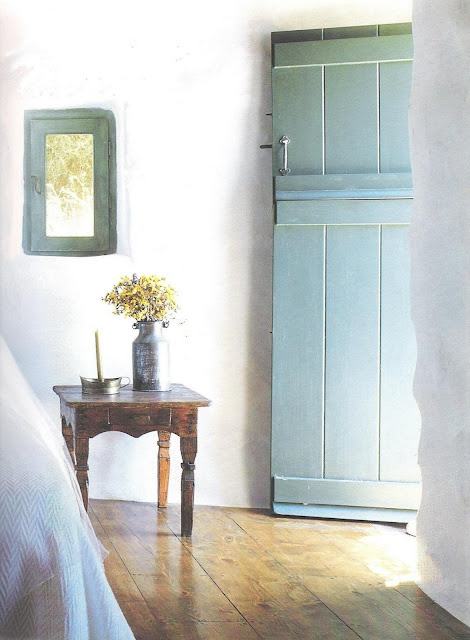
Window and lily's via Côté Ouest Magazine as seen on linenandlavender.blogspot.com, http://www.linenandlavender.blogspot.com/2009/07/wind-and-water.html

Photo credits in order of appearance: 1-Cote Sud Feb-Mar 2004; 2-feng shui your life, Jayme Barrett; 3-Simple Feng Shui, Gina Lazenby; 4-feng shui your life, Jayme Barrett; 5-The Peaceful Home, Country Living 6-Cote Ouest.  
linenandlavender.blogspot.com


You might also like:   Balanced Living

see our new site:


a few of our favorite things

a few of our favorite things
click image to view all items

Italia! per sempre www.linenlavenderlife.com

Be Love.

l&l collection no. 11

l&l collection no. 12 - It speaks to me.

.

. . . . . . .
composition ii

collection no. 04

Fireworks from the Ponte Vecchio

Fireworks from the Ponte Vecchio
Giovanni Signorini (Firenze)

Matera Italy


This = Love


Search l&l:

Translate

At our house:

At our house:
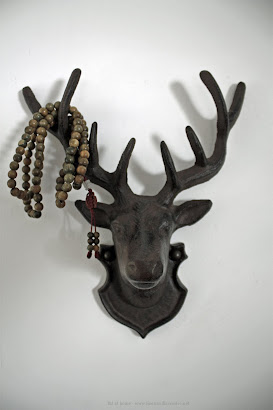
{Cast iron deer plaque used as wall hook} 9.5"x8.5"x3.5" - $29.

Might I suggest?...

Might I suggest?...
Caprese salad is traditionally made with fresh buffalo mozzarella cheese –burrata cheese takes it to a whole new level...

Essential Oils ~ Gifts of Nature - linenalvenderlife.com

Essential Oils ~ Gifts of Nature -  linenalvenderlife.com
There is something at once familiar and mysterious...

Appennino by Giambologna

Appennino by Giambologna
Between 1568 and 1586 Bernardo Buontalenti built a great palace at Pratolino...

John Saladino Feature

John Saladino Feature
"Every home should be a sanctuary...

Thinking Outside the Box on linenlavenderlife.com

Thinking Outside the Box  on linenlavenderlife.com
...you'll be greeted by a peaceful storehouse of colors and textures —Feng Shui Heaven!

The Heart of the Home

The Heart of the Home
In art and design, we refer to negative and positive space...

Dream Weavers - Rumi

Dream Weavers - Rumi
I found my dreams but the moon took me away...

Wind and Water

Wind and Water
A balanced living environment generates well-being and a balanced life...

"It's a mystery."

"It's a mystery."
Even when all indicators seem in opposition to what I want...

Rose Tarlow, The Private House

Rose Tarlow, The Private House
...interspersed with enchanting memories of her childhood home "Windrift" and inspiration garnered from the green fields of Ireland to antiquing jaunts in the heart of Paris.

l&l life